Search Behavior
How intent becomes visible before a decision is made.
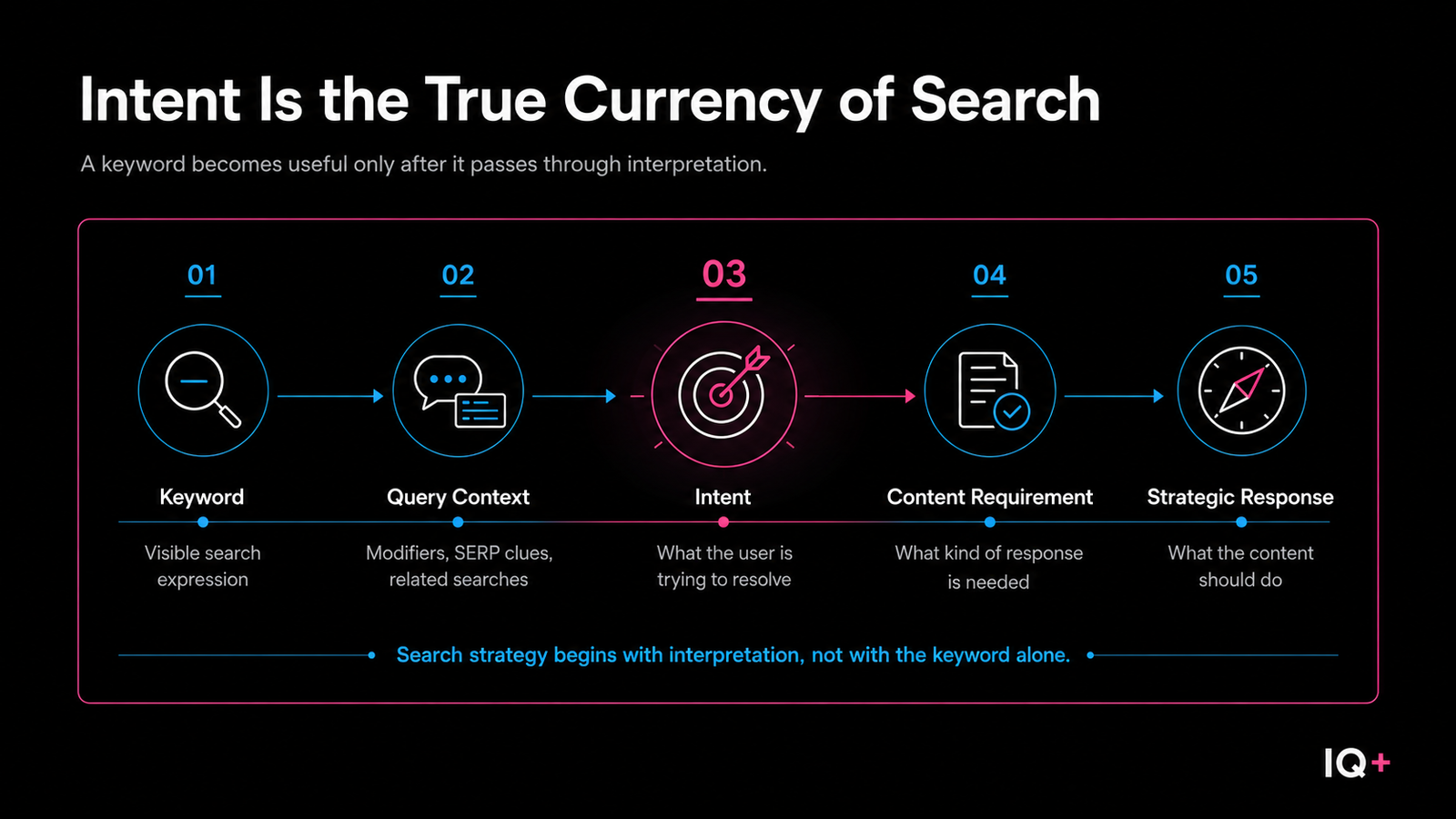
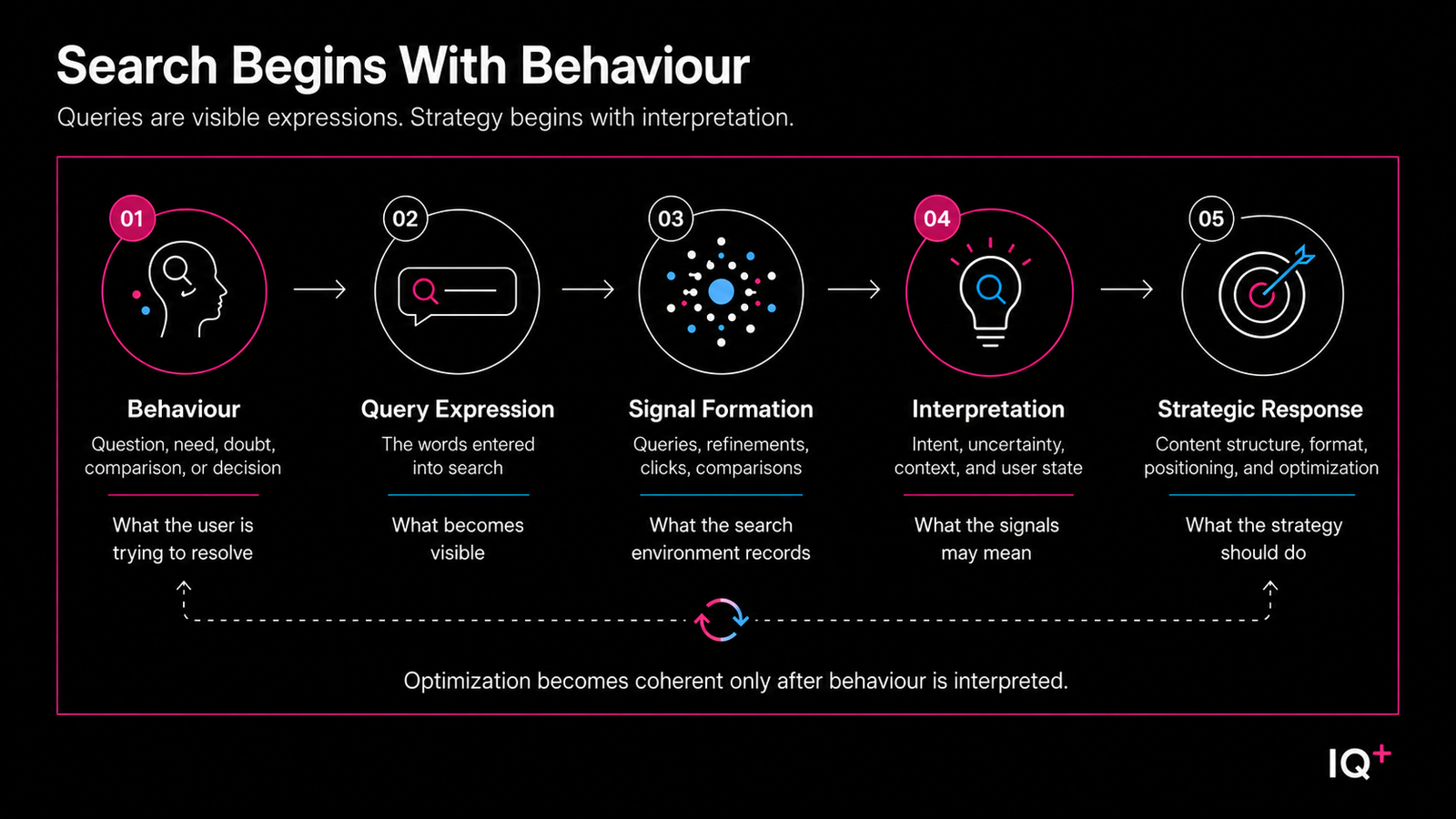
Search behavior reveals how people look for answers, compare options, and express intent through the language they use. This lens examines search as a behavioral signal, showing how questions, comparisons, and uncertainty provide insight into the decisions people are making.
What Search Behavior Reveals
Search behavior focuses on the actions people take before they arrive at a page, make a comparison, or choose a direction.
It looks at the questions they ask, the words they choose, the order of their searches, and the way their needs become clearer or more complex over time.
Search behavior may look simple on the surface, but it can reflect confusion, evaluation, urgency, hesitation, or a need for reassurance.
The purpose is not to extract more keywords.
The purpose is to understand what search activity suggests about the user’s decision process.
Google’s explanation of how Search interprets queries supports this distinction. Its systems examine the meaning and intent behind the words used, alongside context and other signals, rather than relying on exact keyword matching alone.
What Search Behavior Helps Identify
Search behavior can show where interpretation begins to break down.
A business may see traffic, rankings, or query volume and assume it understands demand. But those signals can be misread when the context behind the search is ignored.
This lens helps identify where:
- Keywords are being mistaken for intent
- Content answers the query but misses the need
- Search patterns reveal uncertainty that the page does not address
- Ranking decisions are made without understanding the user’s stage of thinking
- Demand is interpreted too narrowly
The value of this lens is not only in seeing what people search.
It is in noticing where the meaning of that search is being reduced, flattened, or misread.
Where Search Behavior Fits
Search behavior sits at the point where intent first becomes visible.
Before a person reaches a website, reads a page, compares an offer, or takes action, search often captures the earliest expression of what they are trying to understand.
This makes search behavior an important starting point for analysis. It shows the movement from need to signal: a person has a question, a constraint, a concern, or a goal, and search becomes one way to express that need.
Within AnalytIQs+, this lens helps anchor the beginning of the decision process.
It gives the analysis a signal to start before moving into interpretation, content response, brand framing, or system design.
Core Questions Behind This Lens
Search Behavior is built around a simple concern:
What can search activity tell us before a decision is made?
From there, the lens explores questions such as:
- What does a search reveal about need, uncertainty, or comparison?
- When does keyword data hide the reason behind the query?
- How do search patterns change as people move closer to a decision?
- Where does content respond to the search but miss the situation behind it?
- What happens when search is treated as traffic instead of behavior?
These questions help keep the analysis grounded.
They move the focus away from search volume alone and toward the decision process that search activity makes partially visible.
What You Will Find Here
This lens examines search behavior as an early signal in digital decision-making.
The writing examines how people search, how intent shifts across contexts, and how search activity can expose gaps between what a business sees and what a user is trying to resolve.
It does not focus on SEO tricks, ranking shortcuts, or keyword lists.
It focuses on interpretation.
The purpose is to read search activity more carefully so that content, positioning, and digital decisions are built on a clearer understanding of what people are actually trying to do.

Related Analysis
Search Behavior is one application of the broader AnalytIQs+ framework. It connects closely with Data Interpretation, where behavioral signals become structured visibility for analysis. For a deeper treatment of this lens, read Search as a Behavioral Signal System and Beyond Keywords: Why Intent Is the True Currency of Search.
Stay Connected
Receive new AnalytIQs+ essays and publication updates directly by email.