Brand Narrative
How meaning is shaped before trust is formed.
Brand narrative is not simply what a business says about itself. It shapes how people understand its role, compare alternatives, and decide whether it is relevant to their needs. This lens examines how meaning is communicated and how that meaning influences trust, interpretation, and action.
What Brand Narrative Examines
Brand narrative examines how a business creates meaning around what it does, who it serves, and why it matters.
It looks at the language, claims, promises, and explanations that shape how people understand the brand before they decide whether to trust it, compare it, or act on it.
A message may sound clear internally but still cause confusion if it does not align with what people need to understand from the outside.
This lens is concerned with the space between what a business says, what people take from it, and how they respond.
The purpose is not to make the brand sound more polished.
The purpose is to understand whether the narrative supports clear interpretation, relevant comparison, justified trust, and coherent action.
Qualtrics’ guide to brand experience supports this broader view. It explains that people form an overall perception of a brand through every interaction and impression, not through messaging alone, and that this experience can shape trust and future behavior.
What Brand Narrative Helps Identify
Brand narrative helps show where the meaning a business creates does not match the behaviour it receives.
A business may describe itself clearly from the inside, but still produce weak signals from the outside: low engagement, poor-fit leads, hesitation, confused comparison, or trust that does not carry through to action.
This lens helps identify where:
- The brand story creates interest, but not confidence
- Messaging attracts attention from the wrong audience
- Positioning makes comparison harder instead of easier
- Claims are not supported by the experience users encounter
- Users respond to the brand in ways the business does not expect
The value of this lens is in connecting narrative to observable response.
It helps examine whether the story being told is producing clear understanding, relevant trust, and coherent decision behaviour.
Where Brand Narrative Fits
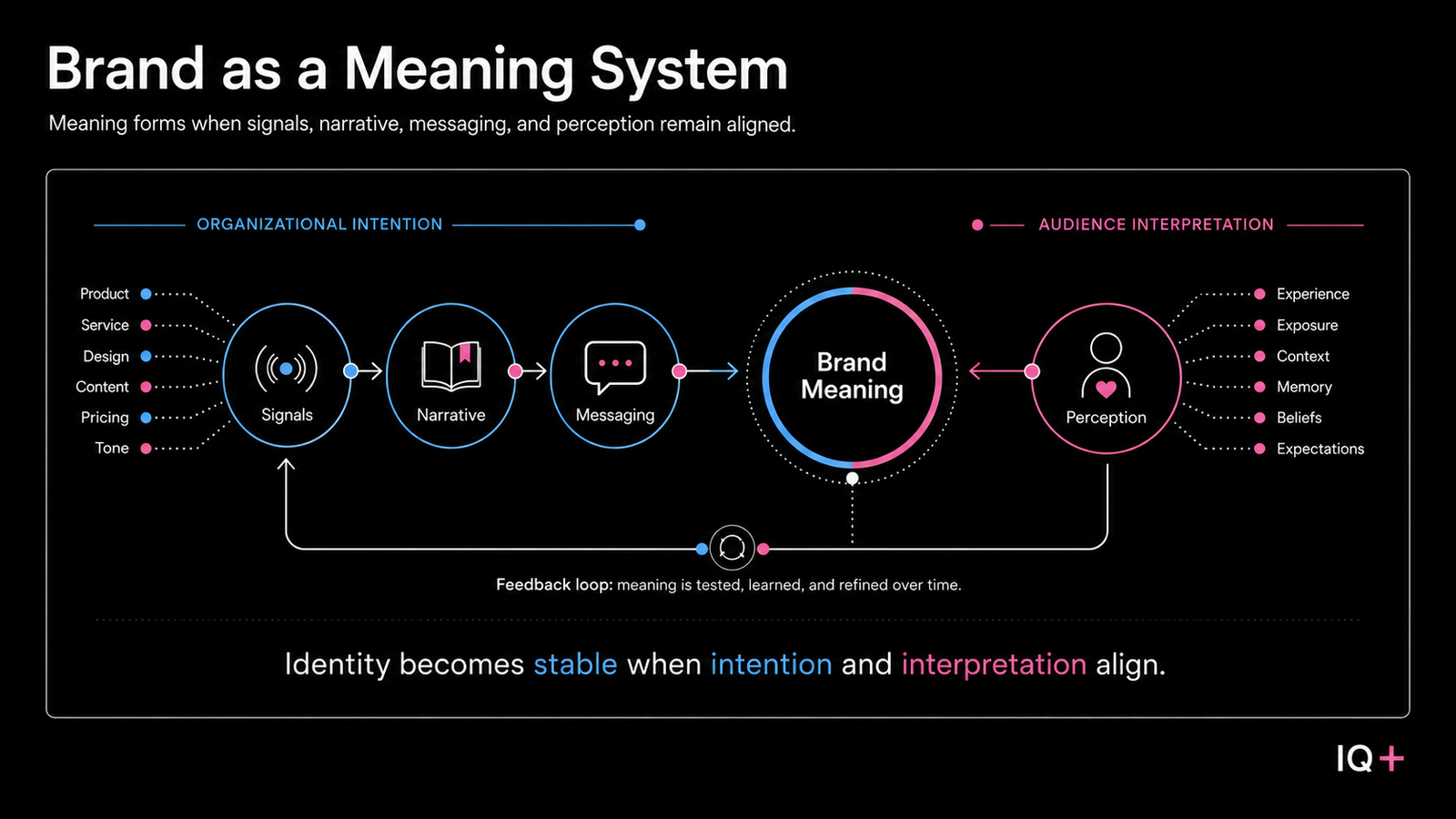
Brand narrative sits at the point where meaning begins to shape response.
After signals are interpreted, a business has to decide how it will explain itself, frame its value, and guide people toward understanding. This is where narrative begins to influence comparison, trust, hesitation, and action.
Within AnalytIQs+, this lens helps examine how interpretation becomes public-facing meaning.
It shows how a business turns what it believes, offers, and understands about its audience into the language and structure people encounter.
When this stage is weak, the system may still produce visibility or attention, but the response can become unclear, misaligned, or difficult to trust.
Core Questions Behind This Lens
Brand Narrative is built around a simple concern:
How does a brand shape meaning around what it does, who it serves, and why it matters?
From there, the lens explores questions such as:
- What meaning is the brand trying to create?
- Does the narrative match what users actually experience?
- Where does positioning clarify a decision, and where does it create confusion?
- What assumptions does the brand make about its audience?
- How does narrative influence trust, comparison, and choice?
These questions help keep the analysis tied to observable responses.
They shift the focus from messaging as expression to narrative as a force shaping understanding, behaviour, and decision-making.
What You Will Find Here
This lens examines brand narrative as the point at which meaning becomes visible through user responses.
The writing looks at how brands frame their value, how people interpret that framing, and where narrative can either support or weaken trust, comparison, and action.
It does not focus on slogans, personality, or messaging style for its own sake.
It focuses on interpretation.
The purpose is to read brand narrative more carefully so that positioning, content, and digital decisions are built on a clearer understanding of how people make sense of what a business says.
Related Analysis
Brand Narrative is one application of the broader AnalytIQs+ framework. It connects closely with Content Systems, where narrative structure becomes visible through publishing patterns, information architecture, and repeated editorial decisions.
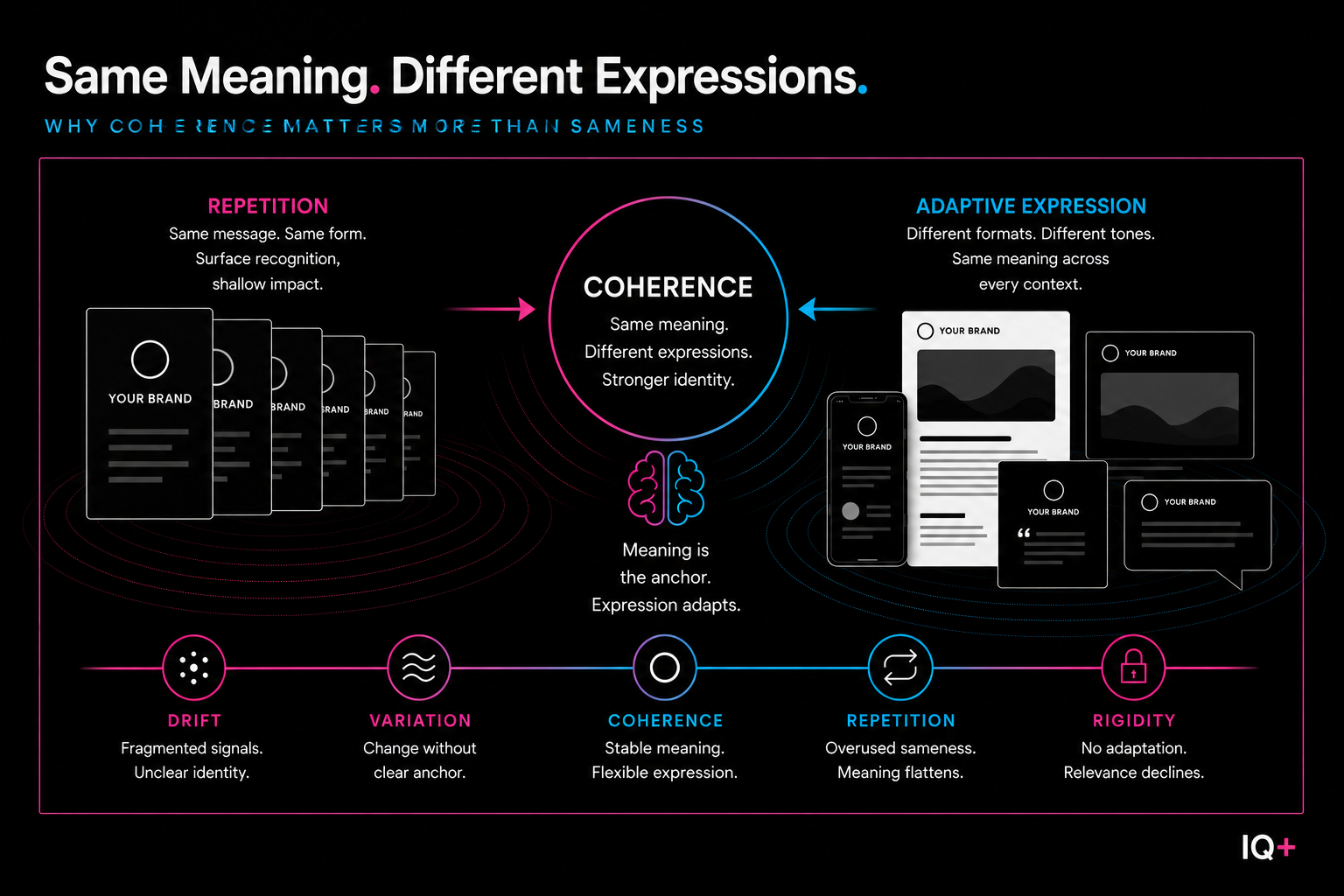
It also connects to Consistency vs. Repetition: Preserving Meaning Across Expressions, which examines how brand meaning remains coherent across changing forms and contexts.
Stay Connected
Receive new AnalytIQs+ essays and publication updates directly by email.